Enhanced Due Diligence Checklist: 6 Essentials for 2026
Published: March 11, 2026Enhanced due diligence (EDD) is a cornerstone of compliance in private markets, where investor structures and regulations are often complex. Beyond basic KYC procedures, when it comes to high-risk clients — firms must conduct extensive checks to ensure reliability as well as compliance with regulatory requirements. However, EDD tends to be as burdensome as it is important: a 2024 Accenture survey found that 83% of PE leaders say their due diligence approach needs significant improvement, while 75% report that deal complexity has increased in recent years.
When is Enhanced Due Diligence (EDD) required?
Standard due diligence (often referred to as CDD or SDD) applies to every investor as part of basic KYC — verifying identity, collecting documents, and screening against sanctions and politically exposed persons (PEPs). EDD is triggered only when the client’s risk profile is elevated — for example, following a PEP match, when onboarding investors and nominees from high-risk jurisdictions, or when dealing with complex structures such as trusts and multi-layered SPVs.

Enhanced due diligence in private markets often means untangling complex webs of investors, SPVs, and beneficial owners.
This guide highlights six essential EDD measures to help asset managers, private equity, venture capital, and hedge fund teams streamline onboarding, strengthen compliance, and remain audit-ready.
1. What is Customer Identity Verification (IDV) and why is it important?
The gist
Customer Identity Verification (IDV) is the foundation of any due diligence process. It confirms that investors are who they claim to be, reduces onboarding risk, and helps safeguard against regulatory breaches. For enhanced due diligence (EDD) on high-risk clients, firms must go beyond basic ID checks by validating personal details (such as name, date of birth, and address) against multiple official documents. This establishes a reliable baseline before deeper due diligence is conducted. IDV is further supported by sanctions and PEP screening (addressed separately in Sections 3 and 4). Customer Identity Verification (IDV) is the foundation of any due diligence process. It confirms that investors are who they claim to be, reduces onboarding risk, and helps safeguard against regulatory breaches.
For enhanced due diligence (EDD) on high-risk clients, firms must go beyond basic ID checks by validating personal details (such as name, date of birth, and address) against multiple official documents. This establishes a reliable baseline before deeper due diligence is conducted.
IDV is further supported by sanctions and PEP screening (addressed separately in Sections 3 and 4).
The challenges
• Collecting and validating documents from global investors typically means relying on notary certifications, which is expensive and time-consuming, especially when structures involve SPVs, trusts, or multiple jurisdictions.
• Manual checks across fragmented systems slow down onboarding and increase error risk.
• Privacy and data-handling obligations (e.g., GDPR) add complexity when storing sensitive investor information.
• Overly intrusive requests or repeated document collection can frustrate investors and harm their onboarding experience.
What you should do
• Ensure automated ID verification tools are integrated into onboarding workflows, minimizing manual exceptions and delays.
• Apply a risk-based approach: lighter checks for low-risk investors, enhanced review for high-risk profiles.
• Provide upfront, standardized document request lists and use a single platform for document uploads to reduce back-and-forth and investor frustration.
• Centralize verification data in a single platform with automated sanctions and PEP updates for audit readiness.
2. Source of Wealth (SoW) and Source of Funds (SoF) Documentation
The gist
Source of Wealth (SoW) relates to how an investor accumulated their overall wealth, while Source of Funds (SoF) is about the specific money being used for an investment. Both are central to enhanced due diligence.
For asset managers, this step helps mitigate risks of money laundering and ensures that subscription capital originates from legitimate channels. Documentation typically includes audited financial statements, tax returns, inheritance records, or title deeds.
This documentation is later validated during ongoing fund flow monitoring (see Section 4).
The challenges
• Complex investor structures (SPVs, trusts, feeder funds) obscure the true source of funds.
• Multi-jurisdiction documentation makes verification slow and inconsistent.
• Reliance on certified translations and notarized documents creates delays.
• High-net-worth investors may see repeated requests for sensitive documents as intrusive.
• Manual review strains compliance resources and risks inconsistent decision-making.
What you should do
• Align documentation requirements with regulatory expectations (FATF, SEC, FCA) and apply them consistently across all vehicles.
• Where appropriate, rely on documentation or confirmations from regulated financial institutions in AML-equivalent jurisdictions as supporting evidence for the legitimacy of transferred funds.
• Apply a risk-based approach: escalate checks only for higher-risk jurisdictions or complex structures.
• Use trusted data providers (e.g., World-Check, LexisNexis) to corroborate investor disclosures.
• Automate document intake and validation to flag missing, expired, or uncertified documents.
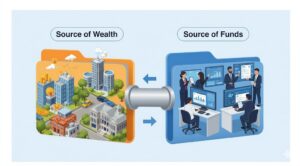
Checking Source of Wealth and Source of Funds ensures that both the investor’s overall assets and the specific investment capital are legitimate.
3. Deep-Dive Review of Sanctions, Watchlist, and Adverse Media Alerts
The gist
Baseline sanctions and watchlist screening is mandatory for every investor as part of SDD, with ongoing monitoring to catch changes in status.
Under EDD, the difference is how firms handle alerts: they must investigate potential matches in greater depth, review adverse media, and assess Source of Wealth to determine whether the risk is acceptable.
The challenges
• Complex ownership structures obscure ultimate beneficial owners.
• Multiple overlapping sanctions lists require deeper reconciliation and constant updates.
• False positives from common names or transliteration differences increase manual workload.
• Limited investor data complicates enhanced screening and slows escalation reviews.
• Ongoing monitoring without automation drains resources, especially when EDD cases require repeated follow-up.
What you should do
• Screen at onboarding and key fund lifecycle events (capital calls, distributions, transfers), and investigate any alerts in detail.
• Rely on an enterprise-grade sanctions provider (e.g., World-Check) integrated directly into compliance systems to ensure comprehensive and current coverage.
• Combine fuzzy matching thresholds with human review to reduce false positives without missing genuine risks.
• Automate continuous re-screening when sanctions lists update.
• Define escalation workflows and document all outcomes for audit readiness. Notes should clearly explain the rationale for clearance or escalation, referencing the fund’s AML policy and risk appetite.
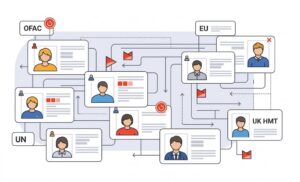
4. Fund Flow Monitoring and Unusual Transaction Review
The gist
In private markets, “transaction monitoring” takes a different shape than in banking. Asset managers and their fund administrators are not processing thousands of daily payments, but they must still monitor fund flows for unusual activity.
This includes ensuring that subscription inflows, capital calls, distributions, and secondary transfers align with the investor’s profile and declared source of funds.
The goal is to identify red flags such as unexplained incoming payments from third parties or subscription inflows inconsistent with the investor’s wealth profile.
The challenges
• Payments from third-party or nominee accounts complicate reconciliation and increase risk of money laundering.
• Cross-border wires in multiple currencies create AML complexity.
• Secondary transfers can obscure the true beneficial owner.
• Disconnected systems between fund administration, finance, and compliance slow detection.
• Manual exceptions increase the risk of missed red flags.
What you should do
• Reconcile inflows against declared investor accounts and escalate any third-party or nominee payments.
• Screen again at fund events such as distributions, redemptions, and transfers.
• Automate reconciliation and alerts to flag mismatches between expected and actual flows.
• Establish escalation and approval protocols for unusual transactions.
• Train teams to flag anomalies specific to private markets, such as capital calls funded from unexpected accounts or redemptions inconsistent with fund terms.
5. Ultimate Beneficial Ownership (UBO) Verification
The gist
For private market firms, enhanced due diligence requires full transparency over who ultimately owns or controls an investment.
UBO verification ensures firms can identify and verify the individuals behind layered structures such as trusts, SPVs, and nominee vehicles, and confirm that they are not attempting to obscure true ownership.
Clear documentation of who the UBOs are is critical to meet AML standards and support efficient periodic reviews (see Section 6).
The challenges
• Complex ownership structures (trusts, SPVs, nominee vehicles) obscure UBOs.
• Certified translations and notarizations delay onboarding.
• Some investors resist providing full ownership details.
What you should do
• Standardize UBO documentation and certification requirements across all investors.
• Use technology to map and visualize ownership layers, flagging missing or vague links.
• Escalate high-risk or unexplained structures to senior compliance or legal teams.
• Maintain consistent, audit-ready ownership files accessible across funds.
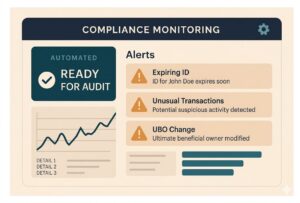
Centralized monitoring dashboards reduce manual work and ensure firms remain audit-ready at all times.
6. Maintaining Continuous Compliance via Ongoing Monitoring and Periodic Reviews
The gist
EDD doesn’t end at onboarding. For private market firms, ongoing monitoring and periodic reviews ensure investor risk profiles remain accurate and that firms are audit-ready.
Effective monitoring depends on accurate and complete upfront ownership and business purpose verification.
The challenges
• Manual reviews for hundreds of investors consume resources.
• Review frequency must be defined in the fund’s AML policy and aligned with local AML regulations.
• Multi-fund investors may be reviewed multiple times unnecessarily.
• Tracking document expirations without automation is difficult.
• Repeated requests risk frustrating investors.
What you should do
• Apply risk-based review cycles (e.g., annual for high-risk investors and every 2–3 years for lower-risk investors).
• Trigger reviews when risk events occur (e.g., unexpected payment behavior or adverse media).
• Automate re-screening and expiry tracking for IDs, passports, and utility bills.
• Centralize investor records to streamline monitoring and reduce duplication.
• Maintain clear audit trails of reviews, updates, and escalation decisions.
The Bottom Line: Embracing EDD Innovation to Stay Ahead
Enhanced due diligence in private markets is complex by nature. Multi-layered ownership structures, fragmented documentation, cross-border regulatory requirements, and constant monitoring demands create significant operational strain.
Manual processes can no longer keep pace with investor expectations or regulator scrutiny.
The path forward lies in automation: centralized platforms that streamline document collection, integrate with data providers, synchronize with fund admin systems and CRMs, and automatically trigger reviews when documents expire or risk factors change.
Allvue’s 2025 GP Outlook found that 82% of private equity and VC firms have adopted AI in some form, underscoring that automation is becoming an integral part of modern compliance operations.
Solutions built specifically for private market firms, such as Blackbird, bring these capabilities together in one environment. By combining AI-driven KYC and AML workflows with integrations across World-Check, DocuSign, Salesforce, fund admin systems, and Excel, Blackbird enables firms to accelerate compliance processes, strengthen oversight, and scale without adding operational complexity.
If you’d like to see the Blackbird platform in action, reach out to our team to arrange a call.